Longevity & Anti-Aging Research Peptides
Research use only. These compounds are laboratory reference materials supplied to qualified researchers and institutional laboratories. They are not medicines, supplements or consumer products, are not for human consumption, and are not sold for personal weight-loss, fitness, recovery or anti-aging use.
Cellular aging research examines senescence, mitochondrial efficiency, redox balance and epigenetic drift, and each of those readouts is vulnerable to impurities in the material under test. This group supplies the peptides and cofactors most used in that literature as documented reference standards.
Compound identity, purity and handling are stated per lot, so a senescence or oxidative-stress result can be traced back to verified starting material rather than an uncharacterised sample.
Research focus areas
Cellular senescence models
Senescence-associated markers, cell-cycle arrest and SASP-signaling assays.
Mitochondrial function
Respiration, membrane-potential and biogenesis studies in cultured cells.
Redox homeostasis
Glutathione, oxidative-stress and antioxidant-capacity measurements.
Epigenetic & telomere research
Reference standards for epigenetic-clock and telomere-maintenance investigations.
5 documented reference standards
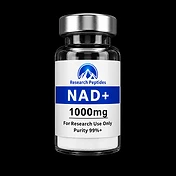
NAD+
1000mg

MOT-c
10mg

ARA-290
10mg

Melanotan II
10mg


Glutathione
1500mg
Longevity & Wellness questions
Are these anti-aging products I can take?
No. They are laboratory reference materials for in-vitro research, not supplements, cosmetics or medicines, and are not for human consumption. We supply qualified researchers and institutions only; personal longevity or wellness use is not supported.
What does the longevity collection include?
It includes peptides studied in senescence, mitochondrial and epigenetic contexts alongside supporting cofactors such as glutathione, each supplied with lot-specific analytical documentation. The catalog lists current presentations.
Do you publish the analytical data for aging-research compounds?
Yes. Every lot is HPLC and mass-spectrometry verified at ≥99% purity before release, and the certificate is published in the public COA directory and linked from the compound page.